Storytelling in an interactive medium like games is a tricky and to me fascinating thing, requiring you as a writer to do more with somewhat less (as most games - Death Stranding, looking at you here - can’t get away with asking the player to sit through thirty-minute cinematic cutscenes or 1,000-word text blocks to establish characters or setting) and to cede a much larger degree of narrative control to the player than in passive media. Outside the most rigid, on-rails game structure, the speed at which a player completes sections, or the order in which they encounter them (if at all), or the choices they make can and should have an effect on its pace, direction, tone, and outcome.
This isn’t always to the narrative’s benefit, and there’s a degree to which the audience has to accept the limitations of the form: I have fond memories of reaching the final stage of Fallout 3’s linear main story which I knew ended the game - you sacrifice yourself Spock-style to fix a live reactor and restore water to the wasteland - and deciding to go check for anything I’d missed on the map first. So I left my dad and a variety of other characters waiting for me outside the reactor and headed off into the wilds for several days, discovered the very silly “Republic of Dave” and rigged its elections, helped a rogue Mr Handy butler robot out and generally goofed around until eventually returning to find everyone still waiting for me, po-faced, to take the Noble Sacrifice way out. (A sacrifice that was itself ridiculous: by this point I had so much radiation protection gear and drugs that I could have spent hours inside the reactor with nothing more than a suntan.)
The most common, and simplest in terms of how much player buggering around you have to account for, is the gated linear narrative (not an official term): by completing a mission, or reaching a geographic point, or otherwise completing an objective, you unlock the next part of the main story, whether told through character conversation, cutscene, conveniently abandoned audio log, or just your next mission text. In this kind of structure, your game’s mechanics - combat, resource collecting, exploration, puzzle solving, etc. - and the speed the player uses them sets your game’s overall pace, and the unfolding story acts as both a reward for engaging with those mechanics in the first place and as a way of contextualising the player’s actions. As game mechanics are typically quite repetitive (there’s a reason it’s referred to as a “core gameplay loop”), a good story or engaging characters can create a lot more attachment and engagement in a player than the simple dopamine hit of Numbers Getting Bigger by itself.
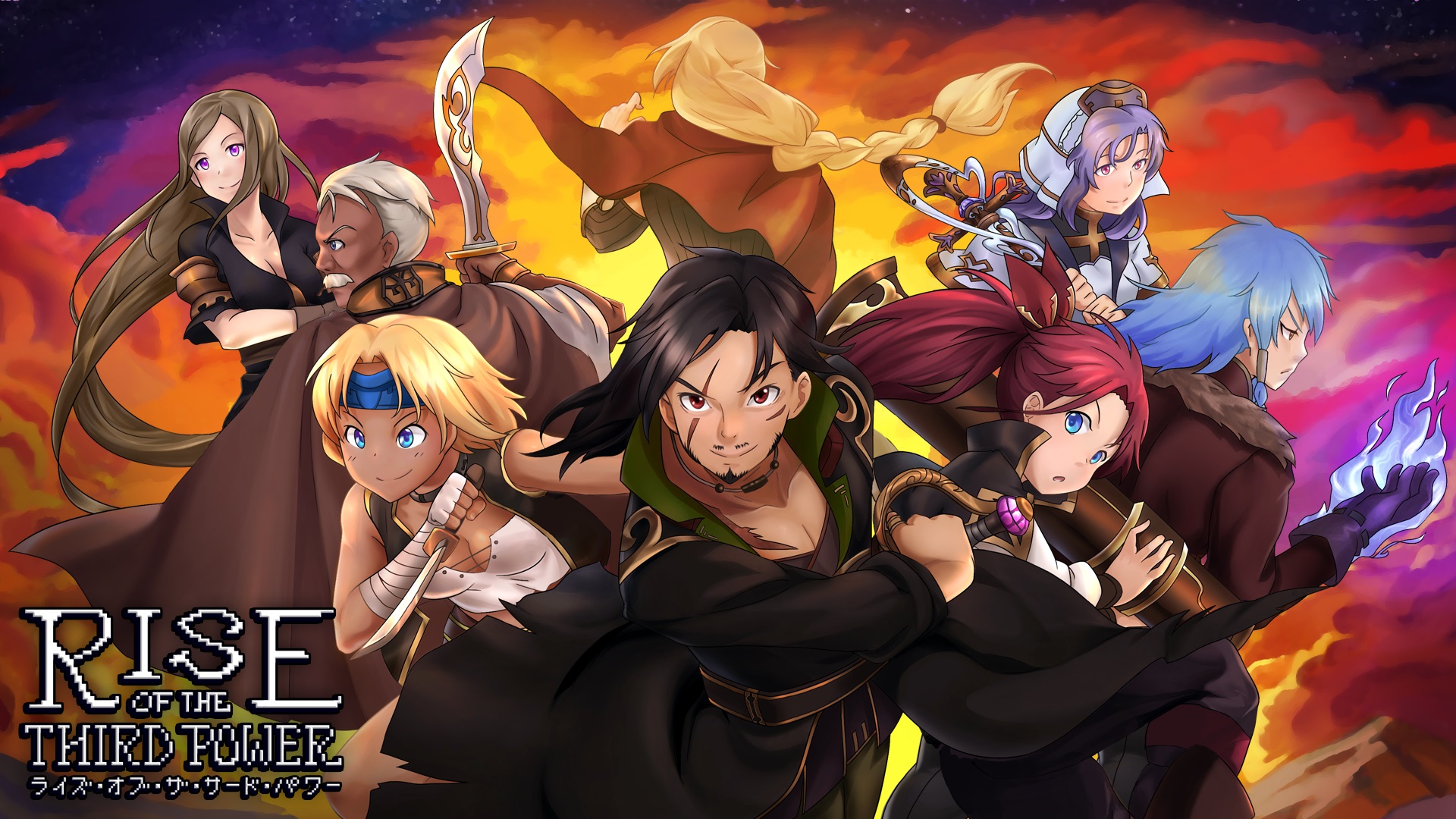
Which brings me round to Stegosoft’s Rise of the Third Power, a weirdly overlooked indie JRPG which was one of my games of last year largely on the strength of its storytelling.
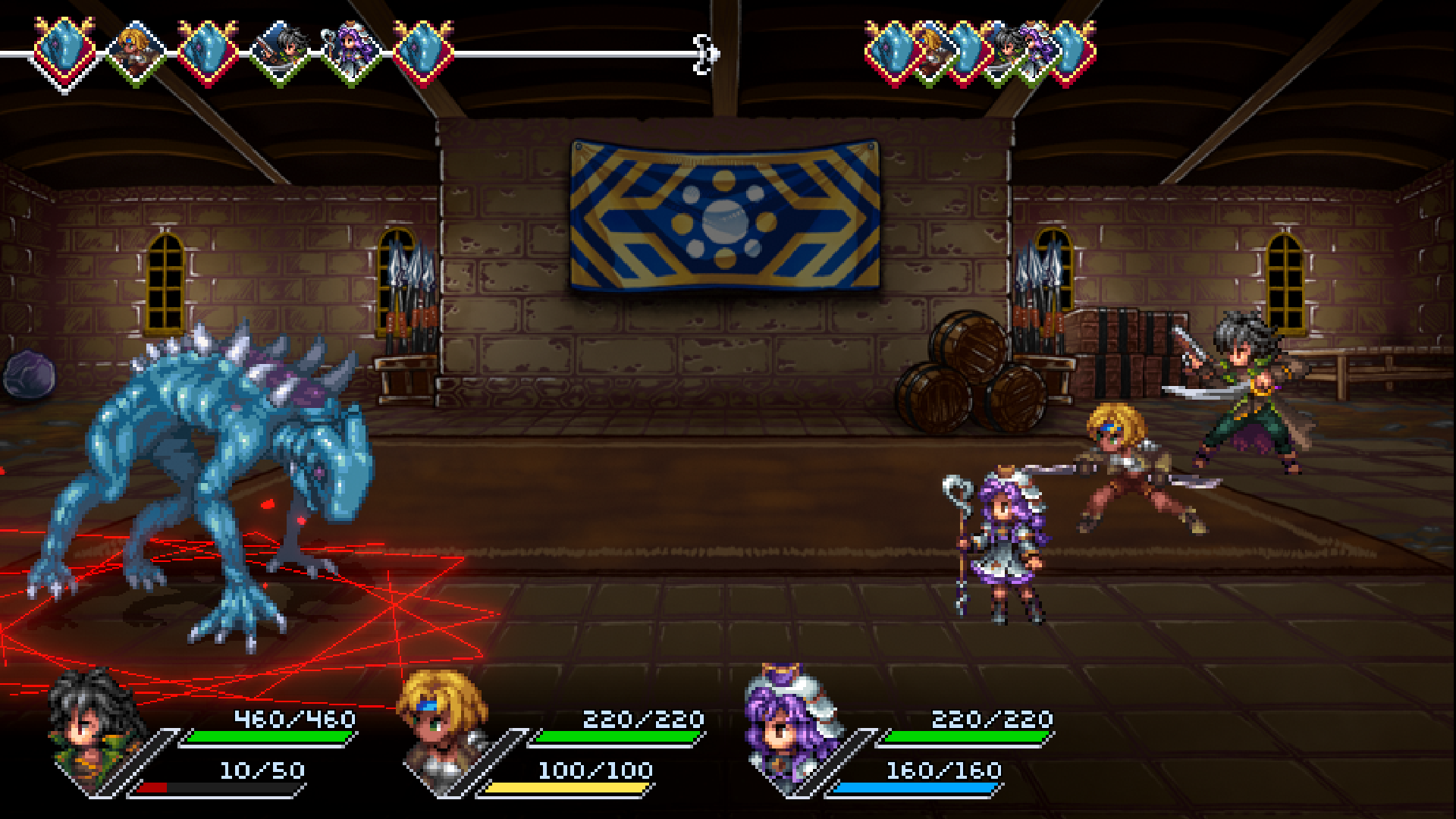
For context, I’ve never been a big JRPG player (for the uninitiated, the term derives from the classic Japanese RPGs of yesteryear - the Final Fantasy series being a classic example - hence the “J”, but the term refers mostly to the mechanics nowadays: you control a party of characters, (usually) turn-based combat in which you choose individual abilities they’ll each use as you flit between them, an overworld map where encounters (usually) take you to a confined battle space to play out, after which you get XP and loot to share around). The furthest I’d gotten into one prior to last year was Yakuza: Like A Dragon, which is a homage to the genre as much as an example, and absolutely bananas. I’ve generally been put off by stories and characters who sound incredibly stock/tropey (or else completely nonsensical), settings that seem too wishy-washy to care about, and sometimes… let’s say the kind of uncomfortable character presentation choices that can give gaming a bad name. However, I’d picked up Stegosoft’s first game, Ara Fell, for peanuts in a GOG sale on the back of reviews calling it a hidden gem. And it is: thoroughly wholesome without being twee, a fairly stock hero’s journey story done well with fun characters, funny when it wants to be and dramatic when it should be, and with a really solid bittersweet payoff to its narrative and characters.
So, when someone mentioned Rise to me late last year, I jumped on it. It’s a bigger game with a more complex setup: a fantasy world loosely based on post-WWI tensions and the aftermath of a destructive but inconclusive war, and with a strong Game of Thrones skullduggery angle in that two of those former combatants, Arkadiya and Cirinthia, are about to cement an alliance and long term peace by marrying their respective heirs, except the baddie Arkadiyan emperor is planning to then stage a false flag attack by Cirinthia’s former wartime ally Tariq and use it as pretext to conquer them before taking over Cirinthia itself. Your initial party consists of ex-pirate Rowan and gung-ho rogue Corrina, breaking into Cirinthia’s royal castle the night before the wedding in order to get in place to kidnap the bride on the orders of a resistance movement who want to show Princess Arielle the truth of the nation she’s marrying into and so stop Arkadiya’s schemes and avoid another brutal war.
From there, hijinks ensue. I won’t go into the specifics of the story, or the other characters you encounter (though they’re all good fun). Suffice to say, things go awry and twist and turn, and you slowly come to learn more about the characters and why they are as they are - and discover through some of the cutscenes that they’re not being entirely honest with one another, or not what they appear.
This is something that even in the brighter and breezier Ara Fell, writer Evelyn Rose Hall did really well. Characters have motivations, personal interests, and will act accordingly even if it’s to their detriment - and learn as a result, or fall. This helps provide friction and tension within your main cast, and the bad guys, quite separate from what the plot’s doing and the ongoing efforts to thwart the ambitions of a quasi-fascist/Stalinist empire.
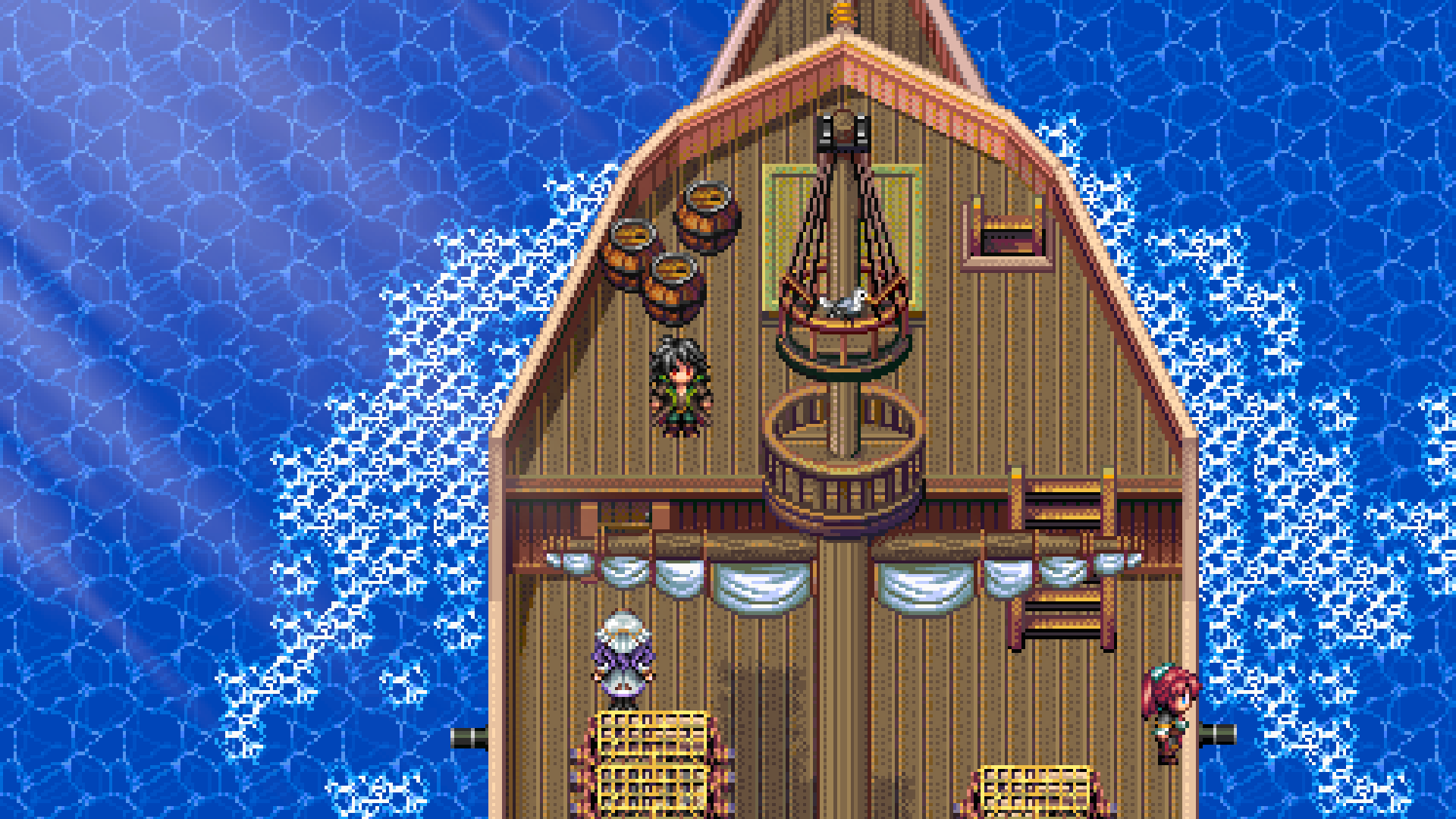
The story’s pacing, as moderated by the need to fight through encounters or solve simple exploration puzzles to unlock the map, is solid too, and the mechanical benefits (better gear and abilities, more characters in your party - each with their own story - are satisfying). Fights are very fast, and while some maps can be a little too large (sewer/tunnel sections especially), it means that things develop steadily because you’re never far from the next step forward. Side-quests are also mostly sensibly short, meaning they can’t interrupt the flow of the main one too much; it’d be very hard to derail it the same way I did that old Fallout 3 game.
Hall also makes good use of cutscenes between chapters to move the wider story along, and pause points - an evening at an inn, a chance to explore town, etc. - to switch focus to a single character and allow them to wander, talk to others, and see how their individual arcs are progressing before plunging back into the main narrative. (I’ve always mentally called these “campfire scenes”, and they work well here in particular because the main cast is quite large and these give them room to breathe.) And she makes bigger, more dramatically important scenes longer, gives them time to sit, characters to interact and reflect their importance, in a way that less vital ones don’t.
The underlying narrative isn’t wildly reinventing the wheel in its broad strokes - it’s your basic thwart-the-evil-empire romp in a GoT-does-interwar-Europe world - but it doesn’t need to. It’s a slice of solidly entertaining adventure with some great dialogue and a proper dramatic arc to it, where the game mechanics mesh well with both the story’s content and its tone, and help to pull the player into seeing the characters overcome the challenges in front of them. All while never - tunnel sections maybe aside - forgetting to be fun.
Really, consistently good. One of the best games I played last year, and as good an example of a thoroughly pleasant gated linear interactive narrative as you could hope to find.